
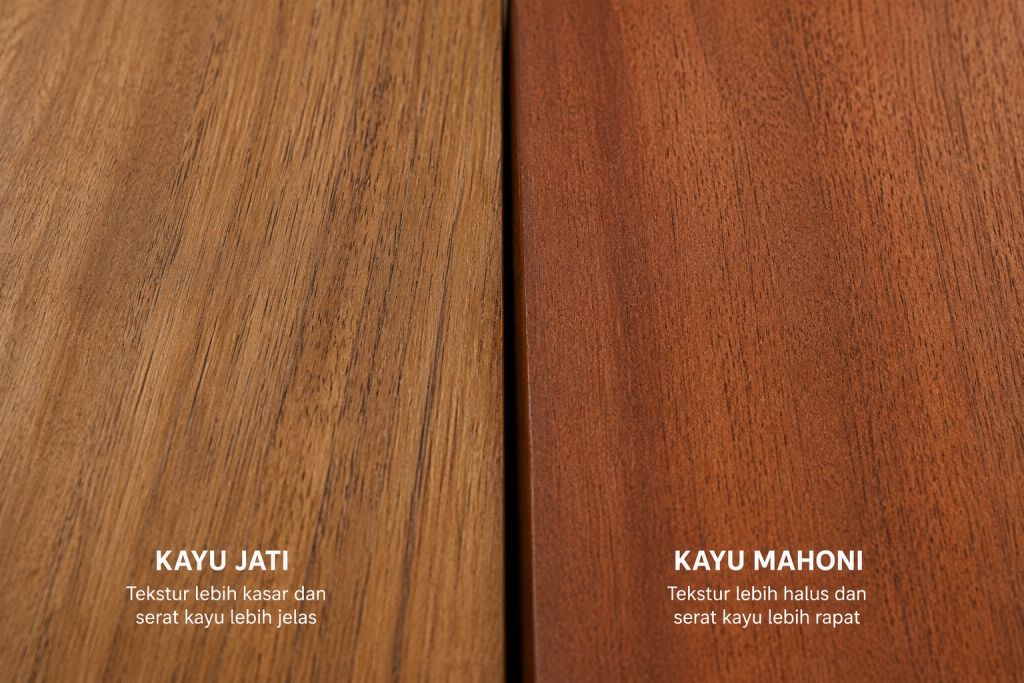
The mahogany and teak comparison is often the main debate for homeowners when choosing high-quality furniture. Indeed, these two tropical hardwoods dominate the premium furniture market in Indonesia. Therefore, consumers are frequently confused about making the right choice. In reality, both materials offer incredible visual beauty but possess very different technical characteristics. Buying household furniture is a long-term investment. As a result, making a mistake in selecting the wood type can inflate your expenses due to maintenance costs or premature furniture replacement. Thus, this article will scientifically dissect the performance of both woods based on data so you can shop wisely.
Understanding the Basic Characteristics in the Mahogany and Teak Comparison
Before looking at the technical data, let’s understand the visual identity and origins of these two legendary materials.
1. Characteristics of Teak Wood (Tectona grandis)
Teak wood is famously known as the king of tropical woods. Typically, teak trees thrive in Southeast Asia, including the Perhutani-managed forests in Indonesia. Visually, this material features a distinctive golden-brown color. Furthermore, its grain pattern tends to be straight and tight, giving a majestic and highly natural impression to every wooden board.
2. Characteristics of Mahogany Wood (Swietenia macrophylla)
Conversely, mahogany wood is the star for classic and modern minimalist furniture. This wood has an original reddish-brown color that becomes more mature and exotic over time. Subsequently, mahogany’s wood grain is generally straight, smooth, and has smaller pores than teak. Thanks to these characteristics, the surface of mahogany feels incredibly smooth after the sanding process.
Technical Data Analysis: A Scientific Mahogany and Teak Comparison
To provide an objective assessment, we must refer to internationally recognized wood testing data. In this case, the two main indicators most frequently used are the Janka Hardness Rating and the Shrinkage Rate (Dimensional Stability).
Here is a technical data comparison table between mature teak wood and mahogany wood:
| Quality Indicator | Mature Teak Wood | Mahogany Wood |
| Janka Hardness Rating | 1,000 – 1,150 lbf | 800 – 900 lbf |
| Density (Specific Gravity) | 0.65 – 0.75 g/cm³ | 0.53 – 0.65 g/cm³ |
| Durability Class | Class I (Highly Durable) | Class III (Moderately Durable) |
| Strength Class | Class II | Class II – III |
| Natural Oil Content | Very High (Teak Oil) | Low |
| Pest Resistance (Termites) | Very High | Medium (Requires Treatment) |
Weighing the Pros and Cons of Teak vs Mahogany
Based on the data above, we can map out the actual performance of teak wood in your household environment.
Main Advantages of Teak Wood
- Extreme Durability: The high natural oil content (teak oil) makes teak immune to termite attacks, fungi, and water-induced rot.
- High Dimensional Stability: Moreover, this wood does not easily warp or shrink even if you place it in outdoor areas with extreme weather fluctuations.
- Investment Value: Furthermore, teak furniture has a high resale value due to its scarcity and legendary reputation.
Disadvantages of Teak Wood to Consider
- High Price: Unfortunately, the raw material cost of teak is much more expensive than other hardwoods on the market.
- Limited Finishing Color Options: Additionally, its natural oil content makes teak less suitable for solid paints like white duco. Because, the wood oil can seep through and turn the paint yellowish.
Why Mahogany Can Be an Alternative to Teak?
On the other hand, mahogany is often the best alternative for consumers who want premium quality but have a specific budget limit.
Main Advantages of Mahogany Wood
- Very Friendly to Duco Finishing: Because its natural oil content is low, mahogany serves as the best medium for solid paints (like white, gray, or pastel colors). As a result, the paint will not yellow from within the wood.
- More Affordable Price: Subsequently, mahogany offers a cost efficiency of about 30% to 50% more economical than teak wood for the same furniture size.
- Easy to Shape: Additionally, its smooth grain characteristics make this wood highly ideal for furniture with intricate carving details without the risk of splintering when chiseled.
Disadvantages of Mahogany Wood to Consider
- Vulnerable to Pests Without Treatment: Unlike teak, mahogany does not have natural termite protection as strong as its competitor. Therefore, manufacturers must properly perform an insecticide soaking treatment.
- Only for Indoor Needs: Furthermore, direct exposure to rainwater and scorching sunlight can quickly degrade the mechanical quality of mahogany.
Finishing Harmony on Mahogany and Teak Wood
The application of the top coat (finishing) plays a crucial role in determining the final aesthetic result of your home. Thus, the mahogany and teak comparison in terms of interior decoration heavily depends on the home theme you want to carry. For example, if you love Rustic, Industrial, or Tropical Modern themes, teak wood is the absolute winner. Certainly, the beauty of teak’s grain is optimal when coated with a clear or natural water-based finish. The reason is, this transparent layer highlights the highly artistic wood veins. Conversely, if you prefer Classic European, Scandinavian, or American Classic themes, mahogany is a wise choice. This is because mahogany’s tight pore structure produces a flat and smooth surface (flat finish). Consequently, its appearance perfectly matches clean and neat modern-style furniture.
Guide to Choosing Teak or Mahogany Based on Room Function
To ensure your investment hits the mark, let’s categorize the use of these two materials based on the room zones in your house.
1. Main Living Room and Outdoor Areas (Choose Teak)
Patio chairs, garden tables, and main living room table sets generally endure heavy activity loads and air humidity fluctuations. Therefore, the sturdy physical character of teak ensures that the furniture in these areas will not warp or get damaged even if splashed with water.
2. Children’s Bedrooms and Study Rooms (Choose Mahogany)
Children’s bedroom furniture often requires a touch of bright color to stimulate their creativity. Thus, using mahogany wood with a water-based finishing layer provides the perfect combination of structural strength and safe coating paint beauty.
Why Manufacturing Factors Are Just as Important as Wood Material?
Ultimately, the greatness of either teak or mahogany wood will not be maximized if the production process is poor. For instance, young teak wood that is not dried properly will still warp. Similarly, mahogany wood that is not treated with anti-termite medication will be eaten by pests in a matter of months.
To prevent this, you must choose a furniture manufacturer that implements strict quality control. At Indotropic Furniture, we treat every block of material scientifically. Moreover, we ensure every mahogany board goes through an anti-insect steaming process and Kiln Dry oven drying until it reaches an optimal moisture content of 8-12%. With this standard, your mahogany furniture is guaranteed to have dimensional stability that matches the strength of teak wood.
Conclusion of the Mahogany and Teak Comparison: Which Do You Choose?
In conclusion, there is no single answer stating one wood is superior in everything. The final decision in determining the mahogany and teak comparison lies entirely in your hands. Certainly, that choice must be tailored to your functional needs and budget availability.
- As a primary recommendation, use teak wood if you prioritize absolute durability, outdoor placement, love natural grain, and have a flexible budget.
- As an alternative, choose mahogany wood if you want interior furniture with solid paint colors (like duco), love fine carving details, and seek cost efficiency without sacrificing structural strength.
Protect your household shopping budget by choosing the right material for the exact function. Finally, explore our premium furniture collection crafted with high-precision expertise, and find the best products ready to beautify your home today.