
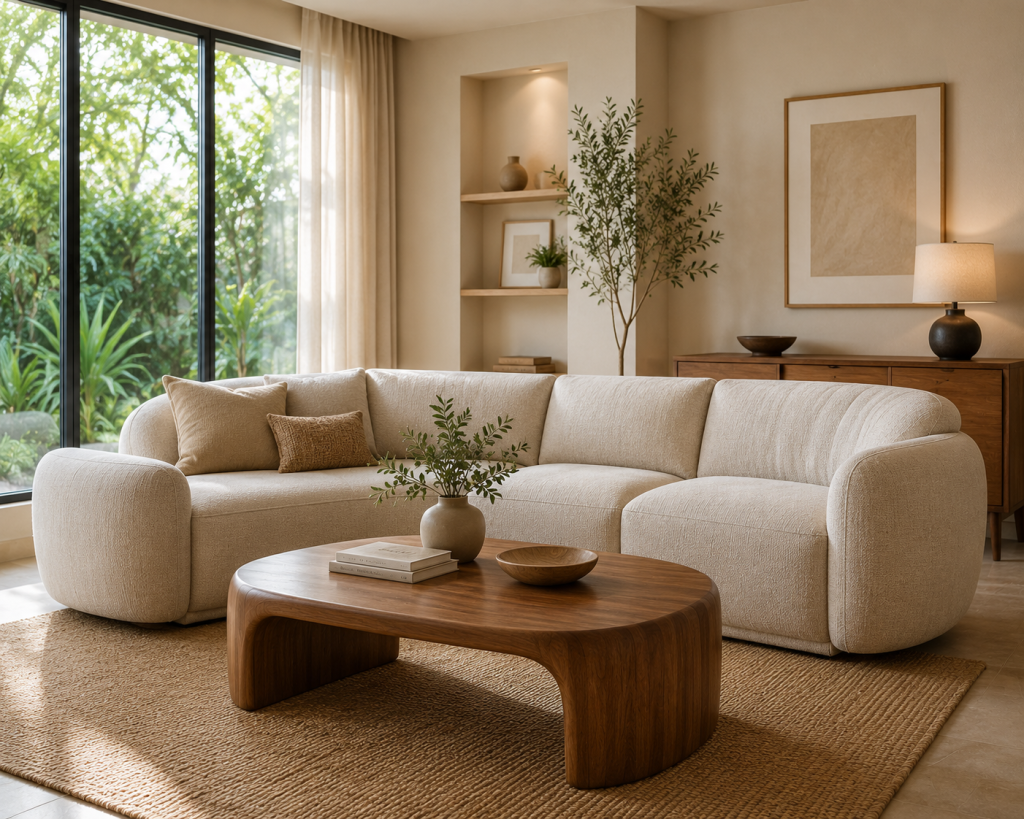
Owning a first home is one of the greatest achievements for millennials and young families today. However, the next challenge that often causes confusion is how to furnish that tiny house so it feels spacious, comfortable, and highly aesthetic. Amidst the barrage of various interior trends, implementing japandi furniture design has now become the star as the most ideal minimalist lifestyle solution.
According to various global housing trend surveys, the majority of young families are starting to abandon furniture styles that are too heavy and full of carvings. Instead, they are shifting to finding a balance between function and visual calmness. Therefore, this article will thoroughly discuss this booming hybrid trend among interior design lovers, as well as how to optimize the use of quality local materials to make it happen.
What Exactly is Japandi Furniture Design?
For those of you hearing this term for the first time, Japandi is a portmanteau of Japanese and Scandinavian styles. Visually, this style takes the best elements from two different worlds.
Scandinavian style is famous for its practicality, cool neutral colors, and emphasis on comfort. Meanwhile, the Japanese style brings elements of traditional elegance, warm earth tones, and a high appreciation for natural material textures. When both are combined, japandi furniture design produces a furniture masterpiece that is very clean, minimal in excessive details, yet does not feel cold or stiff.
Blending Wabi-Sabi and Hygge in Your Interior
The main appeal of this concept is not just its physical form, but the lifestyle philosophy behind it. In this case, there are two main concepts that merge into one:
- Wabi-Sabi (Japan): A philosophy that finds beauty in imperfection and natural things. Therefore, authentic wood grain textures are highly valued in this concept.
- Hygge (Scandinavia): A concept that prioritizes a sense of comfort, togetherness, and warmth in the home. Thus, the furniture must facilitate relaxation after a long day at work.
As a result, every chair or table in this stream functions not only as an inanimate object but also as an element that improves the mental health and peace of its inhabitants.
Why is Japandi Furniture Design So Relevant for Young Families?
This trend is not just a fleeting internet sensation. In fact, its popularity is driven by a shift in how we view the function of a home, especially post-pandemic.
Here is the empirical data and logical reasons why modern families deeply love this style:
- Space Optimization: Skyrocketing property prices make young families prone to buying houses with limited building areas. Because Japandi style furniture features slender legs and non-bulky silhouettes, the air and light circulation in narrow spaces remains feeling airy.
- Focus on Sustainability: Millennials are a generation that cares deeply about environmental issues. Consequently, they prefer investing in a few high-quality, durable items rather than buying fast-furniture made of particleboard that breaks easily.
- Easy Maintenance: Practicality is key for dual-income couples. Furthermore, the straight design lines and flat surfaces make this furniture very easy to clean from daily dust.
Aesthetic and Eco-Friendly Local Wood Material Choices
Although this design concept originated overseas, its manifestation is actually most perfect when executed using Indonesia’s proud tropical materials. Indeed, world designers acknowledge that tropical hardwood possesses far superior mechanical qualities.
1. The Charm of Fresh Teak and Recycled Teak for japandi furniture design
Teak wood (Tectona grandis) is the main star in realizing Japanese-style warmth. Usually, to achieve the muted (dim and natural) colors typical of Japandi, teak is coated with a clear water-based or lightly bleached finish.
For families holding eco-friendly principles, using recycled teak is a brilliant choice. Besides saving the environment by not cutting down new trees, recycled teak offers a high level of wood stability. This old material will not shrink or warp even if the weather changes drastically. As a result, your furniture will remain precise and possess an authentic story value (material history).
2. The Bright Touch of Mahogany for a Clean Look
For those of you who prefer a Scandinavian color palette that is very bright and clean, mahogany is a phenomenal material alternative. Often, mahogany is used to make dining chair frames, cabinet wardrobes, or sofa legs painted using the duco method (for example, matte white or light gray).
This is because mahogany has very fine pores and low oil content. Thus, the coating paint color will come out perfectly without the fear of yellowing from within over time.
Tips for Mixing and Matching This Hybrid Style in Various Rooms
Introducing a new style into your home does not mean you have to replace all your existing items. The key lies in the composition and arrangement of focal points. Therefore, here is a practical guide to applying it.
A. Crafting an Inviting Living Room
Avoid using sofa and table sets that are too uniform. Instead, play with material textures. Pair a plush linen fabric sofa with a curved profile wooden coffee table, like the Senja Coffee Table series from our latest catalog. Add a jute rug and broad-leafed indoor plants (like Monstera or Ficus) in the corner of the room. By doing so, the contrast between soft fabric and solid wood will instantly radiate the Japandi aura.
B. Creating the Bedroom as a Sanctuary
The bedroom is where you reset your mind. Thus, use a low-profile bed frame made of bright teak wood. Pair it with soft terracotta or sage green bed sheets. For a reading nook, you can place an ergonomic lounge chair, like the Bumi Lounge Chair, designed with the perfect backrest recline for your spine.
The Importance of the Manufacturing Process Behind Refined Furnishings
This design style demands perfection in simple things. Because of the minimal ornaments and carvings, every wood joint, sanding smoothness, and color evenness becomes highly exposed. Therefore, you cannot just buy furniture anywhere.
The quality of furniture is heavily determined by the material processing in the factory. For instance, if the material does not go through industrial oven drying (Kiln Dry) properly, that thin minimalist wooden frame risks bending in a matter of months. To prevent this, manufacturers must ensure the Moisture Content remains precisely at 8-12%.
At Indotropic Furniture, we fully understand that the millennial market demands uncompromising quality. Moreover, we combine high-precision machinery with the finishing touches of experienced local craftsmen. The final result is a furniture collection whose design lines are exceptionally clean, structurally sturdy, and safe for your family’s health.
Conclusion: Bring Japandi Furniture Design into Your Home with Us
In conclusion, creating an aesthetic home does not have to involve spending funds on complicated decorations. Overall, the implementation of japandi furniture design proves that true beauty is actually born from simplicity, functional balance, and the use of high-quality local wood materials.
This style is not only a feast for the eyes but also reflects the lifestyle of modern families who value tranquility, environmental sustainability (with the utilization of recycled teak), and spatial efficiency.
Starting today, transform the atmosphere of your home into the resting place you long for the most. Explore the latest exclusive catalog from Indotropic Furniture to find your favorite Japandi style furniture collection. Consult your room dimension needs with our expert team, and realize the timeless, warm, and elegant dream interior for your beloved family.