
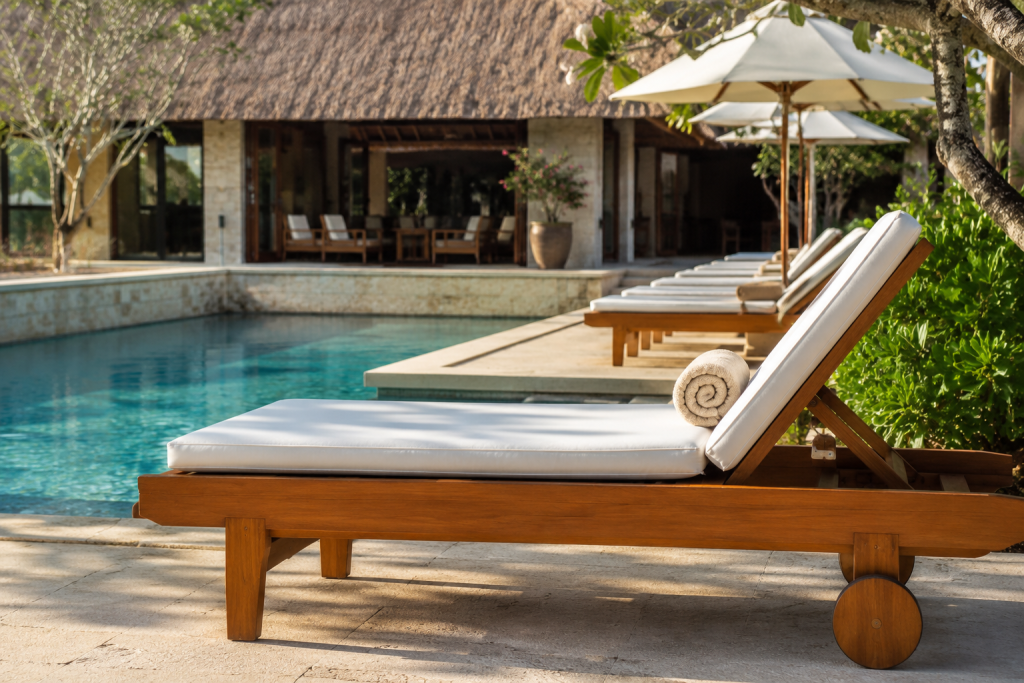
In the luxury hospitality and resort industry, the swimming pool area is far more than a mere amenity. Instead, it serves as a visual centerpiece and a primary hub for guest interaction. The poolside relaxation experience heavily relies on the quality of the facilities provided. Therefore, investing in a premium teak wood sun lounger plays a vital role. However, procurement managers and hotel contractors often face a specific challenge. They must find the perfect balance between high-end aesthetics and absolute durability against extreme weather conditions.
The swimming pool deck is one of the harshest environments for outdoor furniture. For instance, intense ultraviolet (UV) radiation and drastic daily temperature fluctuations can easily damage materials. Furthermore, high humidity, tropical rainfall, and corrosive chlorine from pool water can destroy low-quality materials within months. Because of this, material selection cannot be done carelessly. Consequently, the teak wood sun lounger has emerged as the undisputed gold standard for international hospitality projects.
This article will break down the essential technical specifications and purchasing guidelines for your resort. The goal is to ensure your furniture investment delivers an optimal Return on Investment (ROI).
Why Swimming Pool Areas Demand Specialized Furniture Specifications
Before discussing material advantages, developers must understand the primary threats to outdoor furniture. Here are the main environmental factors that ruin poolside amenities:
- UV Radiation and Solar Heat: Direct sunlight breaks down the chemical bonds in synthetic materials. As a result, plastic becomes brittle, cracks, and fades due to photodegradation. Furthermore, standard metal without specialized coatings absorbs solar heat rapidly. This makes the surface uncomfortably hot for guests, which ultimately lowers customer satisfaction.
- Chlorine and Salt: Chlorine-heavy pool splashes or salty sea air act as highly corrosive agents. Consequently, standard metals oxidize quickly. This rust can also ruin and stain your pool deck flooring.
- Humidity and Tropical Rain: Damp environments and high rainfall create an ideal breeding ground for mold. Therefore, wood-rotting bacteria can easily thrive. Standard organic materials simply cannot survive long-term without suffering structural decay.
To overcome these environmental challenges, material integrity is your absolute key. For a start, you can cross-reference these specifications with global hospitality industry standards.
The Absolute Advantages of a Teak Wood Sun Lounger
In the hierarchy of outdoor furniture materials, teak wood sits at the very top. In fact, it has been the preferred choice for luxury yacht decks for centuries. Because of this, a teak wood sun lounger offers natural protection that synthetic, factory-made materials simply cannot replicate.
1. High Natural Oil and Silica Content for Teak Wood Sun Lounger
The primary secret of teak lies in its chemical composition. Even after being harvested and dried, teak retains an exceptionally high concentration of natural oils and rubber. Furthermore, these natural oils act as an internal water repellent. Consequently, moisture cannot easily penetrate the wood pores. Additionally, its high silica content provides excellent resistance against termites and rot. Therefore, the furniture remains solid even during heavy downpours without requiring extra chemical treatments.
2. Superior Dimensional Stability for Teak Wood Sun Lounger
Teak wood exhibits minimal shrinkage compared to oak or mahogany. With this in mind, its dimensional stability prevents warping, twisting, or cracking under drastic temperature shifts. Even when moving from cold nights to scorching midday heat, the wood remains stable. For contractors, this advantage significantly minimizes warranty claims resulting from structural deformation.
3. Excellent Surface Temperature Regulation
While metal conducts heat rapidly, a teak wood sun lounger acts as a natural thermal insulator. Therefore, its surface remains comfortable to the touch, even after hours of direct sun exposure. Of course, this is a crucial ergonomic factor for five-star hotel standards.
4. An Elegantly Aging Aesthetic
Visually, new teak exudes a luxurious golden-brown hue. However, landscape architects highly appreciate its ability to age gracefully. If left unfinished, weather exposure gradually transforms the wood into a sophisticated silvery patina. In short, this natural transition is highly sought after for both rustic and minimalist resort designs.
Sustainable Alternatives: Using Recycled Teak Wood
Sustainability and green building principles have become major selling points in the global hospitality trend. Because high-end consumers are increasingly mindful of the carbon footprint of their accommodations.
As a responsible procurement solution, contractors can opt for a teak wood sun lounger crafted from recycled teak (recycled teak). It is important to note that this material is salvaged from old structures, bridges, or historic railway tracks. So, the wood is already decades old.
Importantly, this recycling process does not compromise the wood’s strength. On the contrary, this mature wood possesses absolute dryness and dense grain patterns. This occurs because the wood has weathered natural elements for generations. In conclusion, using recycled teak offers a powerful narrative for your resort’s marketing strategy without sacrificing extreme durability.
Technical B2B Procurement Guide for Teak Wood Sun Loungers
Although the material is inherently superior, manufacturing quality can vary between suppliers. Therefore, procurement teams must perform strict technical verifications. Here are the essential parameters to review before signing a Purchase Order (PO):
A. Ensure the Use of Grade A Teak for Teak Wood Sun Lounger
Teak is categorized by strict quality grades. For instance, Grade A comes from the mature heartwood of the tree, offering uniform color, tight grains, and maximum oil content. However, avoid Grade B or C as they contain sapwood. This white outer layer lacks natural outdoor resilience against pests and weather. Alternatively, high-quality recycled teak provides excellent structural integrity and deep character.
B. Moisture Content (MC) Standards
This technical variable is often overlooked by buyers. In fact, a teak wood sun lounger built for extreme weather must maintain a Moisture Content of 10% to 14%. This level is stabilized using strict kiln-drying processes. If the wood is not dried properly, the furniture risks warping and cracking when exposed to poolside heat.
C. Robust Joinery Construction
Never purchase outdoor furniture secured only by standard commercial nails. Instead, proper construction requires Mortise and Tenon joinery. These interlocking joints should be reinforced with wooden dowels and marine-grade epoxy glue. With this setup, the wood can expand and contract naturally without breaking the core structure.
D. Use of Corrosion-Resistant Hardware
Sun loungers often feature adjustable backrests or wheels for mobility. Therefore, ensure all hinges, screws, and mechanisms are made of non-corrosive metals. Solid brass or Stainless Steel (Grade 304 or 316 for coastal resorts) is an absolute requirement. Because standard galvanized screws will rust within months due to chlorine, leaving permanent black rust stains on the wood.
ROI (Return on Investment) Analysis: Long-Term Business Efficiency
For business owners, every purchasing decision comes down to the numbers. Admittedly, the initial Capital Expenditure for a commercial-grade teak wood sun lounger is higher than synthetic rattan or basic aluminum. However, a life-cycle cost analysis reveals a different story:
- Cheap Plastic/Synthetic Loungers: Last only 1–2 years under tropical weather before the frame gets brittle. Consequently, you face constant replacement costs and high operational expense (Opex).
- Mid-Range Aluminum Loungers: Last around 3–5 years but are prone to denting and powder-coating peeling.
- Teak Wood Sun Loungers: Offer a life expectancy of 10 to 25 years, or even longer with basic maintenance.
Therefore, an accurate cost calculation must include recurring shipping fees and the risk of guest complaints. Ultimately, investing in a high-quality teak wood sun lounger slashes long-term operational expenditure by up to 60%. With this in mind, it serves as a strategic move to protect your hotel’s profit margins.
Maintenance Management: Preserving Asset Value
Although classified as low maintenance, this furniture still requires periodic attention. Therefore, housekeeping and engineering teams should adopt the following light maintenance protocols:
- Routine Cleaning: Remove sunscreen residue and chlorine splashes using a soft-bristled brush. As a rule, clean the surfaces every two weeks with mild soapy water. However, avoid using high-pressure washers up close, as extreme pressure can damage the natural wood fibers.
- Finishing Selection: Resort owners have two aesthetic options. First, you can maintain the golden-honey hue by applying a water-based teak sealer every 12 months. Do not use traditional teak oil, as it can trap moisture and invite mold in humid climates. Second, you can choose to leave it unfinished. Consequently, the wood will naturally transition into a beautiful, weathered silvery patina.
- Seasonal Protection: Teak is exceptionally rugged against harsh weather. Nevertheless, covering the loungers with breathable furniture covers during the off-season is highly recommended. By doing so, you protect valuable assets from unnecessary microscopic wear.
Fatal Contractor Mistakes to Avoid
As a summary for contractors, avoid these false efficiency traps during the project bidding process:
- Falling for Low Prices: Cheap pricing usually indicates the use of immature Grade C teak with high moisture content. Furthermore, the joinery is often substandard. Maka dari itu (Therefore), cheap products become a ticking time bomb for your project’s reputation.
- Ignoring Ergonomic Design: Rigid structures that do not support natural body contours will make guests uncomfortable, even with thick cushions. Therefore, ensure your manufacturer understands human ergonomics.
- Overlooking High-Performance Cushions: A premium wood frame must be paired with competent outdoor cushions. As an example, use UV-resistant and anti-fungal acrylic fabrics. Next, combine them with quick-dry foam. Because standard indoor fabrics will quickly develop mold when placed near a pool.
Conclusion
Managing a five-star property means every physical asset must reflect luxury. Therefore, choosing a teak wood sun lounger is a clear commitment to uncompromised quality. It offers remarkable weather resistance, timeless elegance, and a solid ROI. With this in mind, your pool deck will always be ready to welcome VIP guests in pristine condition. So Makesure Your Business partner with an experienced, international-standard manufacturer to preserve the prestige of your resort.